Palatal Expansion
Making room by addressing width.
When the upper jaw is too narrow relative to the lower jaw, simply aligning the teeth may not address the underlying transverse problem.
In a growing child, palatal expansion can increase upper-jaw width and improve the relationship between the upper and lower arches. Growth gives us a valuable opportunity to make that correction.
Why a child may need an expander
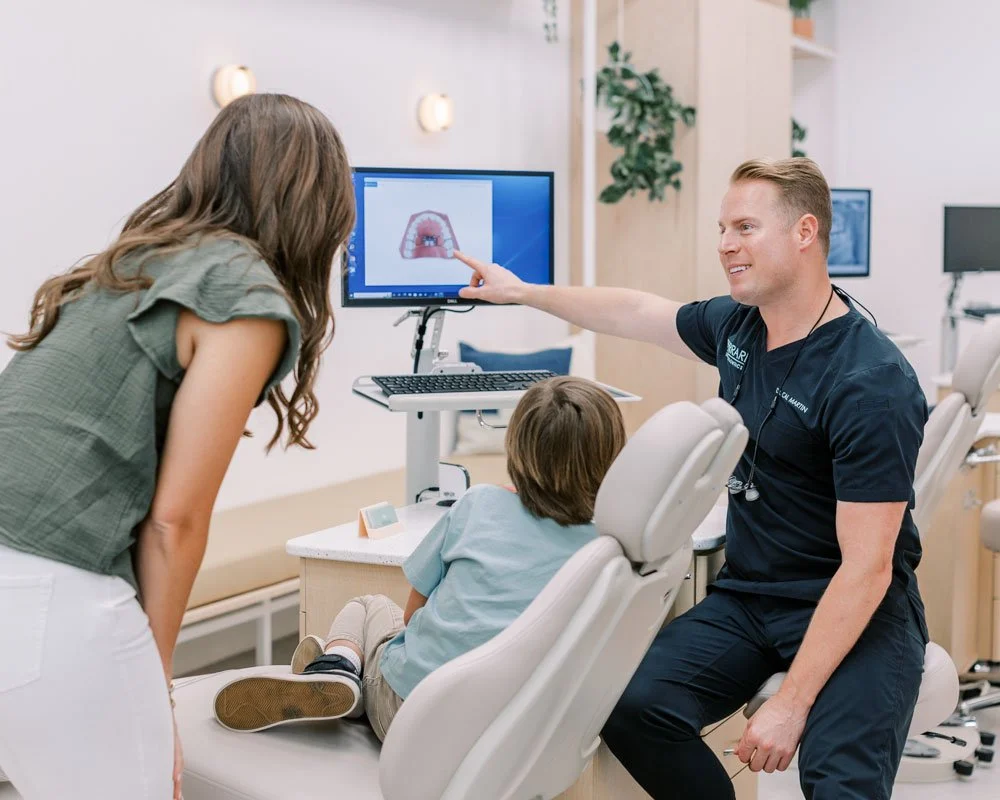
A palatal expander may be recommended when Dr. Martin identifies a transverse discrepancy such as a posterior crossbite, a narrow upper jaw or a functional shift associated with the bite.
Expansion may also be part of a broader plan to improve arch development, create a more appropriate relationship for erupting permanent teeth and establish a better foundation for future orthodontic treatment.
The recommendation is based on the child's specific diagnosis and development.
How palatal expansion works
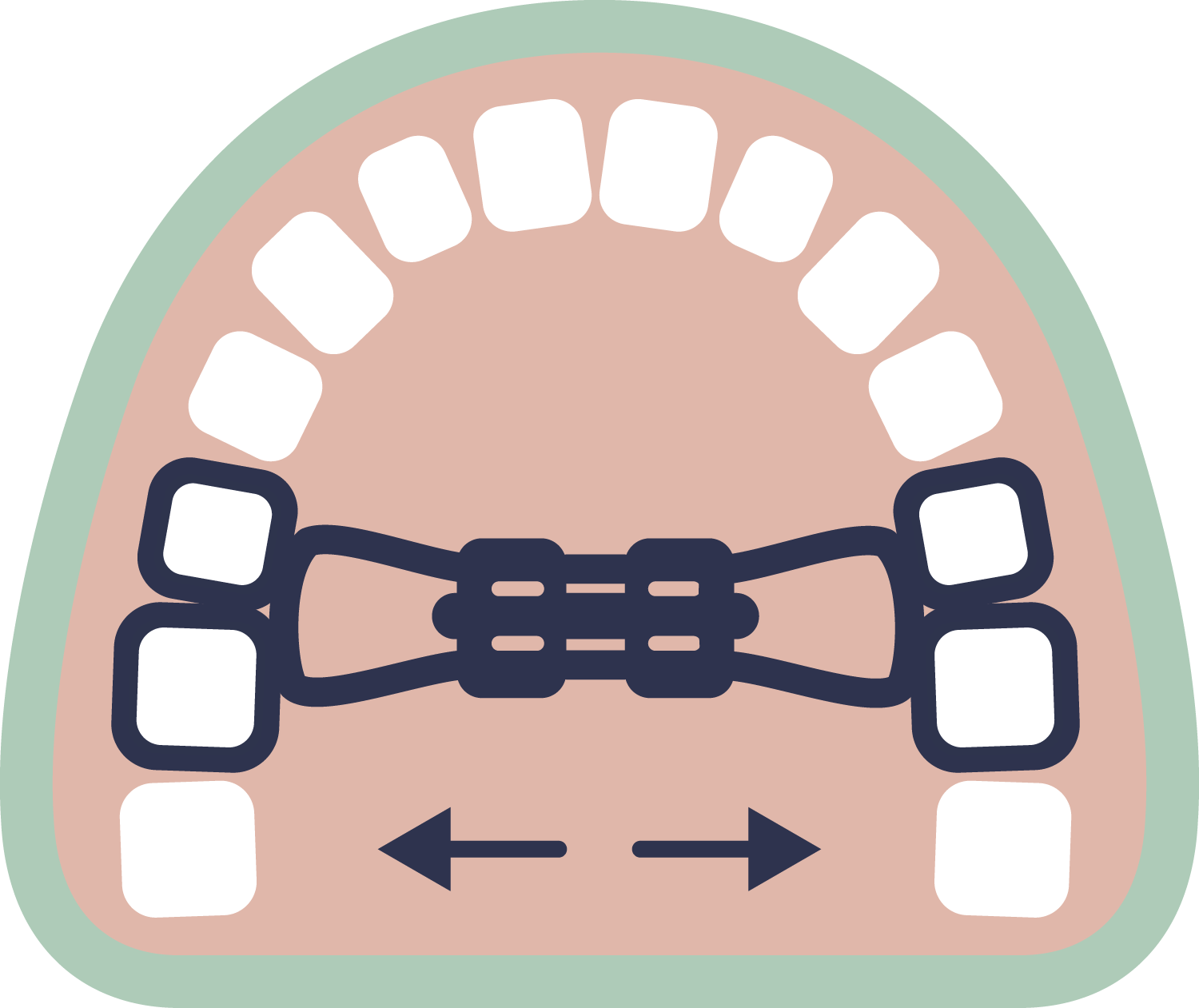
In a growing patient, the right and left sides of the upper jaw meet at the midpalatal suture. During growth, this area is generally more responsive to expansion than it is after skeletal maturity.
A palatal expander applies controlled forces across the upper arch to create the width prescribed for the individual treatment plan while growth biology is favorable.
Parents receive specific activation and hygiene instructions based on the appliance being used.
The right age for expansion
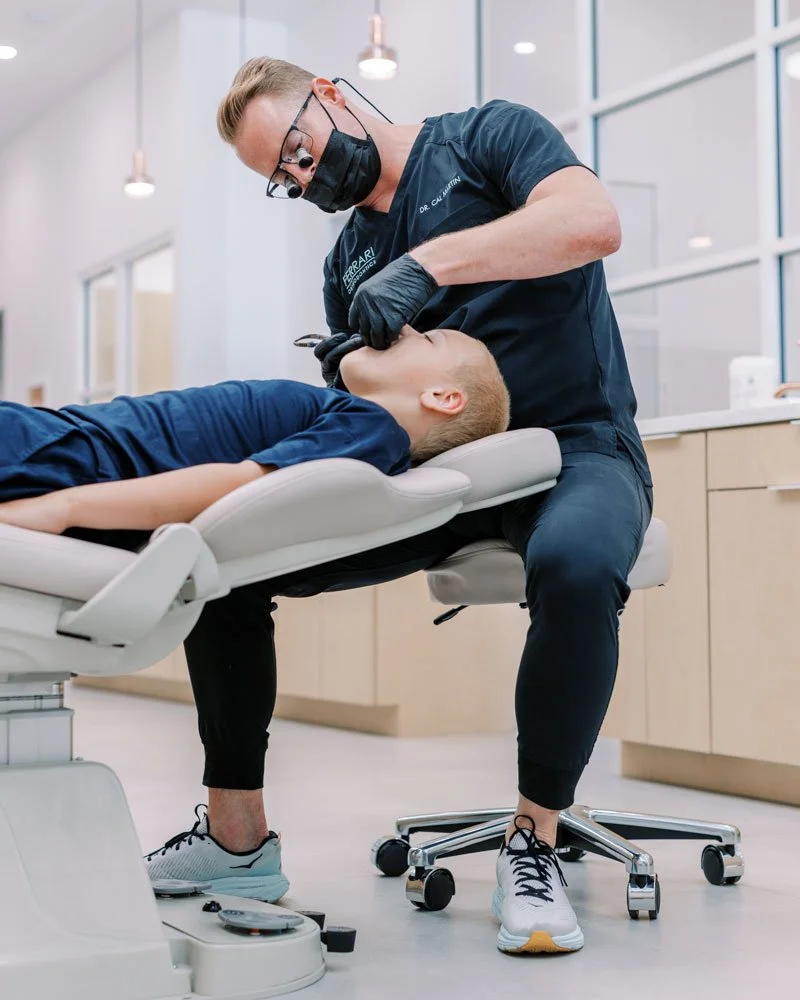
There is no single birthday that determines when expansion should begin. The right timing depends on the child's growth, dental development, skeletal maturity and the transverse problem we are trying to correct.
In growing children, identifying a meaningful transverse discrepancy early gives us the opportunity to work with growth while the developing structures are more responsive.
Rather than waiting for a particular age, we evaluate each child individually and recommend treatment at the time we believe offers the best opportunity for effective correction.

What families should expect
Most children adapt quickly to an expander, although speech, chewing and saliva can feel different for the first several days. Temporary pressure is expected during activation.

Keeping the appliance and surrounding teeth clean is important, and Ferrari Orthodontics will monitor the bite and expansion response throughout treatment.
A space may temporarily appear between the upper front teeth during expansion. Whether that occurs - and how it is managed afterward - depends on the patient and appliance.
Expansion addresses more than alignment.
When a transverse discrepancy is present, expansion gives us the opportunity to address the width of the upper jaw itself and improve the relationship between the arches.
The appliance is selected after the diagnosis.
The opportunity is recognizing the problem early enough to use growth to our advantage.
-
When the upper jaw is too narrow relative to the lower jaw, simply aligning the teeth may not address the underlying transverse problem.
In a growing child, palatal expansion can increase upper-jaw width and improve the relationship between the upper and lower arches. Growth gives us an especially valuable opportunity to make that correction.
-
In a growing patient, the right and left sides of the upper jaw are connected at the midpalatal suture, which has not yet reached adult skeletal maturity.
A palatal expander applies controlled forces across the upper arch to create the width prescribed for the individual treatment plan while growth biology is favorable.
Parents receive specific activation and hygiene instructions based on the appliance being used.
-
There is no single birthday that determines when expansion should begin. The right timing depends on the child's growth, dental development, skeletal maturity and the transverse problem we are trying to correct.
In growing children, identifying a meaningful transverse discrepancy early gives us the opportunity to work with growth while the developing structures are more responsive.
Rather than waiting for a particular age, we evaluate each child individually and recommend treatment at the time we believe offers the best opportunity for effective correction.
FAQ
Expansion treatments
-
![A stylized illustration outline indicating movement or adjustment to the left and right]()
Palatal Expansion
Making room by addressing width
-
![A stylized illustration outline indicating movement or adjustment to the left and right]()
MARPE
A more skeletal approach to expansion
-
![Magnifying glass icon over a green abstract shape.]()
Early Evaluation
Benefiting from timely intervention
-
![Stylized illustration outline of an upper palate with wavy lines.]()
Airway-Conscious
Addressing concerns with breathing
-
![A stylized illustration outline indicating movement or adjustment to the left and right]()
Adult Expansion
Thoughtful expansion strategies for adults