
Airway-Conscious
We pay attention to breathing and to the structures that support it.
Orthodontists evaluate the teeth, jaws and facial growth - structures that exist alongside the nasal and upper airway.
At Ferrari Orthodontics, breathing and sleep history are part of the larger picture. When those concerns overlap with a meaningful orthodontic finding, we consider them thoughtfully and collaborate with medical providers when appropriate.
What airway-conscious means
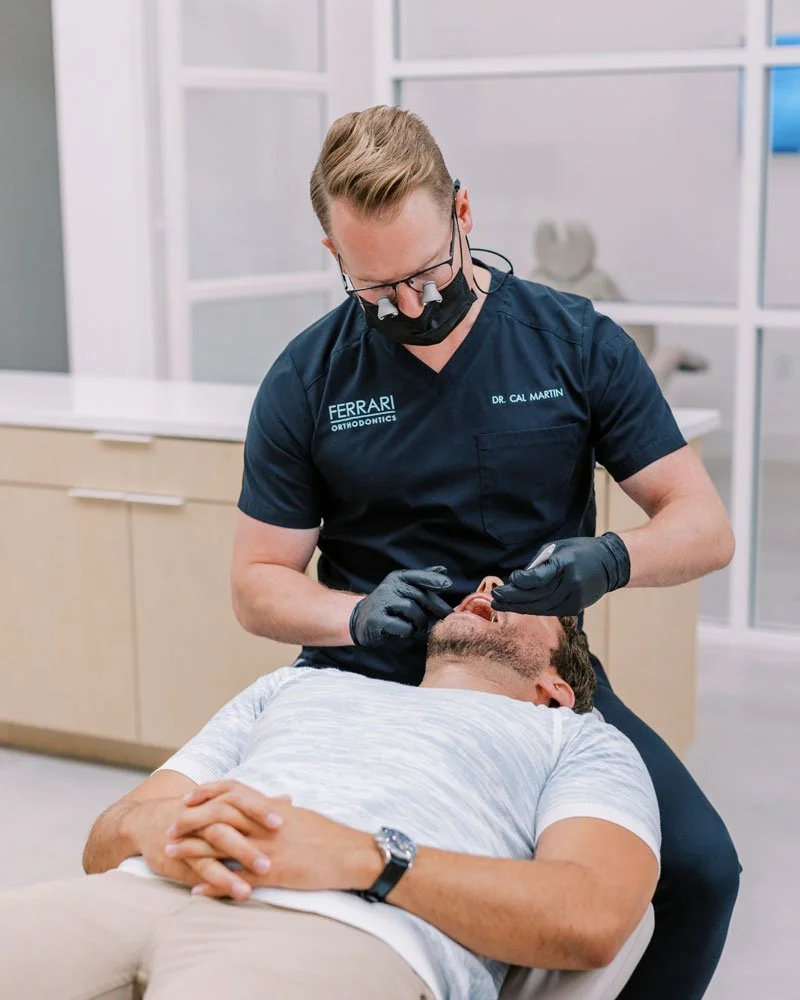
It means we listen when a parent reports chronic mouth breathing, snoring, restless sleep or persistent nasal obstruction.
We include those observations in the broader history, examine the orthodontic and dentofacial findings, and recognize when the pattern may deserve additional evaluation.
Our orthodontic recommendations remain grounded in the patient's dental and skeletal diagnosis.

Who diagnoses sleep apnea?
Obstructive sleep apnea is a medical diagnosis.
An orthodontic exam, photographs, dental X-rays or a CBCT scan cannot by themselves diagnose sleep apnea.

When a patient's history or screening raises a meaningful concern, medical evaluation may be appropriate.
Ferrari Orthodontics collaborates with pediatricians, ENTs, sleep physicians and other providers when the patient's needs extend beyond orthodontics.
Where expansion fits in
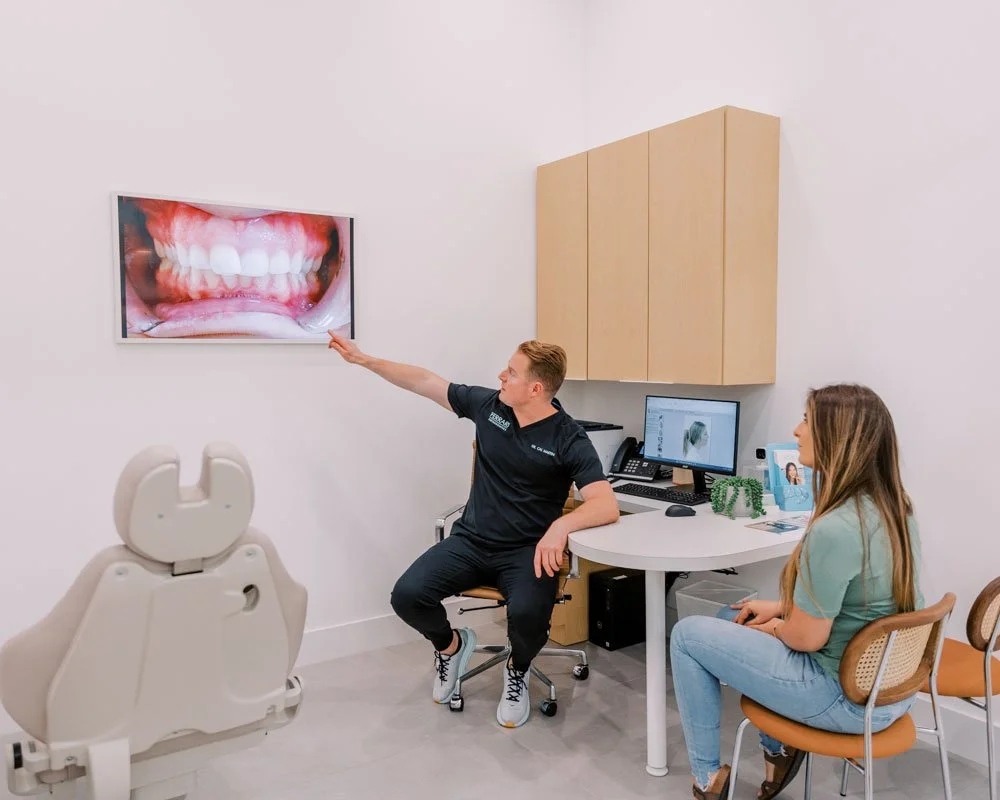
When a patient has maxillary transverse deficiency, a posterior crossbite or another orthodontic indication for expansion, correcting that discrepancy can be an important part of treatment.
Expansion also changes anatomy in the maxillary and nasal region, and research continues to study its effects on nasal dimensions and airflow. Those potential secondary effects are considered in context rather than promised as a universal treatment for sleep-disordered breathing. The primary orthodontic goal remains correction of the diagnosed dental or skeletal discrepancy.
Look at the whole picture. Treat the orthodontic problem well.
Airway-conscious orthodontics means:
Understanding how growth, the jaws, the bite and surrounding anatomy relate to one another

Asking good questions
Recognizing when collaboration adds value
It allows us to be attentive to breathing and sleep concerns while remaining precise about what orthodontic treatment is designed to accomplish.
-
Orthodontists evaluate the teeth, jaws and facial growth - structures that exist alongside the nasal and upper airway.
At Ferrari Orthodontics, breathing and sleep history are part of the larger picture. When those concerns overlap with a meaningful orthodontic finding, we consider them thoughtfully and collaborate with medical providers when appropriate.
We listen when a parent reports chronic mouth breathing, snoring, restless sleep or persistent nasal obstruction.
We include those observations in the broader history, examine the orthodontic and dentofacial findings, and recognize when the pattern may deserve additional evaluation.
-
Obstructive sleep apnea is a medical diagnosis.
An orthodontic exam, photographs, dental X-rays or a CBCT scan cannot by themselves diagnose sleep apnea. When a patient's history or screening raises a meaningful concern, medical evaluation may be appropriate.
Ferrari Orthodontics can collaborate with pediatricians, ENTs, sleep physicians and other providers when the patient's needs extend beyond orthodontics.
-
When a patient has maxillary transverse deficiency, a posterior crossbite or another orthodontic indication for expansion, correcting that discrepancy can be an important part of treatment.
Expansion also changes anatomy in the maxillary and nasal region, and research continues to study its effects on nasal dimensions and airflow. Those potential secondary effects are considered in context rather than promised as a universal treatment for sleep-disordered breathing.
The primary orthodontic goal remains correction of the diagnosed dental or skeletal discrepancy.
FAQ
Expansion treatments
-
![A stylized illustration outline indicating movement or adjustment to the left and right]()
Palatal Expansion
Making room by addressing width
-
![A stylized illustration outline indicating movement or adjustment to the left and right]()
MARPE
A more skeletal approach to expansion
-
![Magnifying glass icon over a green abstract shape background]()
Early Evaluation
Benefiting from timely intervention
-
![Stylized illustration outline of an upper palate with wavy lines.]()
Airway-Conscious
Addressing concerns with breathing
-
![A stylized illustration outline indicating movement or adjustment to the left and right]()
Adult Expansion
Thoughtful expansion strategies for adults