Crossbite
A crossbite is more than a crooked tooth.
A crossbite means that one or more upper teeth bite inside the lower teeth rather than outside them in the expected relationship.
Some crossbites involve individual teeth. Others reflect a broader mismatch in the width or position of the jaws. Understanding which type is present determines the most effective approach to correction.
Anterior + posterior crossbites
A crossbite can occur on one side or both sides.
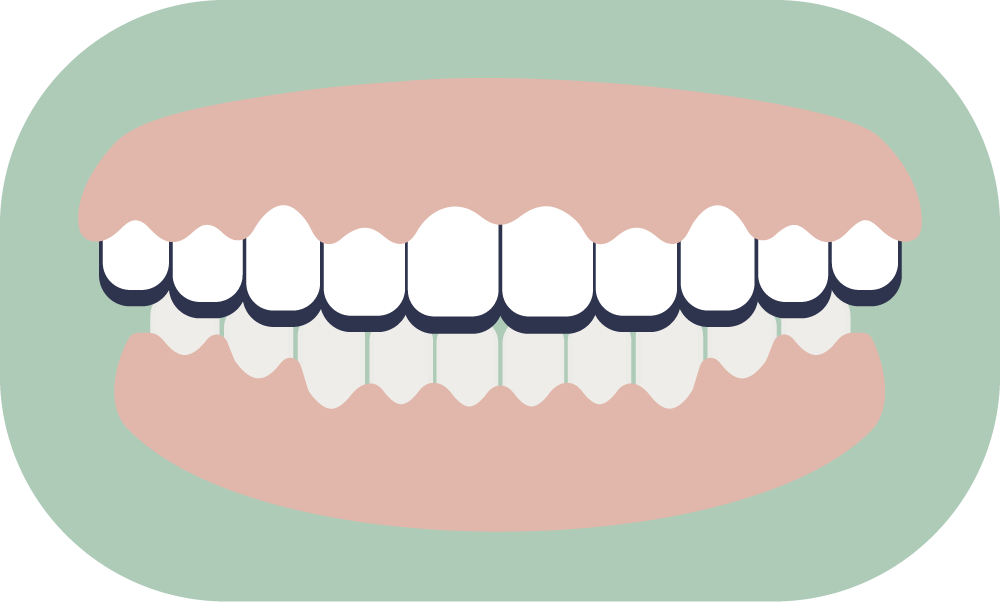
Normal bite
With a normal bite, the upper back teeth sit slightly outside the lower back teeth.
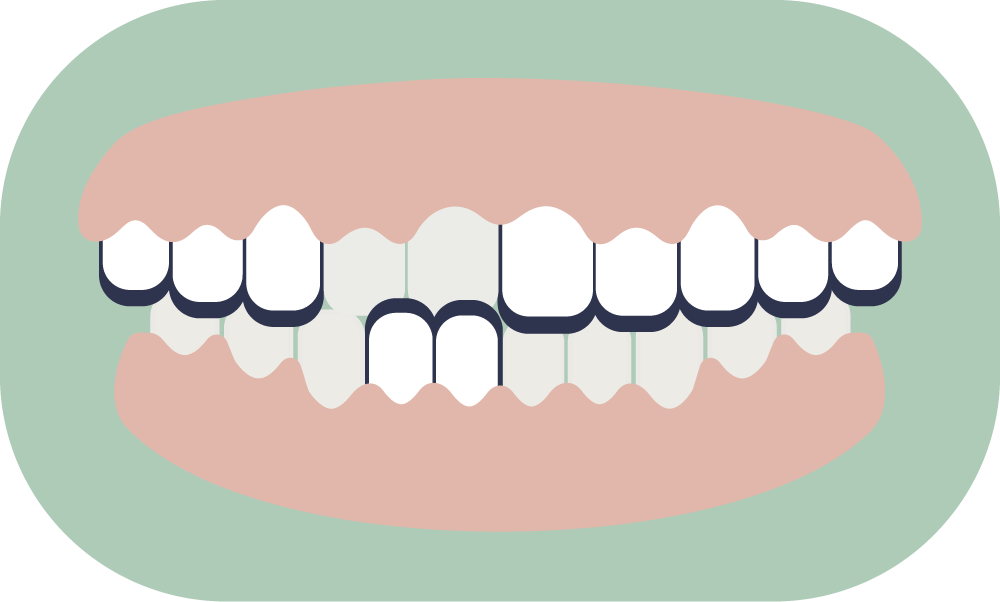
Anterior Crossbite
Anterior crossbite describes an upper front tooth or teeth biting behind the lower front teeth. Depending on the patient, the cause may be dental, skeletal or related to the way the jaw shifts into the bite.
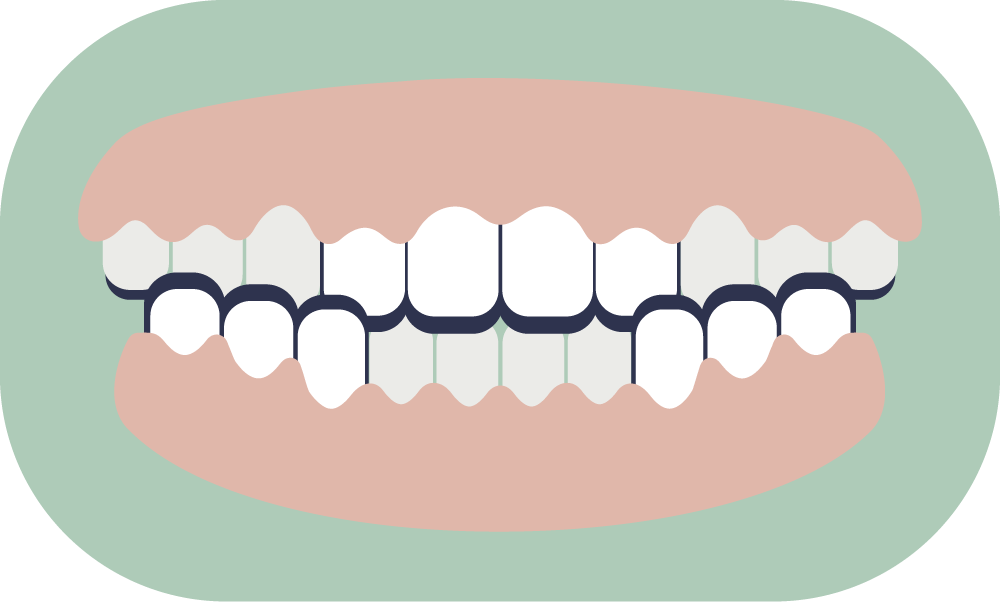
Posterior crossbite
Posterior crossbite involves the back teeth and may be associated with a narrow upper arch or maxillary transverse deficiency.
Why does a functional shift matter?

Some children move the lower jaw to one side when they close because the upper and lower arches do not fit together comfortably in the center.
A functional shift is an important reason to evaluate and address a posterior crossbite while a child is still growing.
The specific treatment depends on whether the crossbite is dental, skeletal or a combination, but the finding deserves timely attention.
Should a crossbite wait until all adult teeth are in?
No - not when a meaningful crossbite or functional shift is already present in a growing child.
If a pediatric dentist identifies a meaningful crossbite or functional shift at age 5 or 6, an orthodontic evaluation can be appropriate. Early evaluation allows Dr. Martin to understand the nature of the problem and determine the most appropriate approach for correction while the child is growing.
Waiting for a particular birthday is less important than understanding and addressing the problem at the appropriate time.
How are crossbites treated?
Treatment depends on the cause.
General Options
Options may include limited tooth movement, palatal expansion, comprehensive orthodontic treatment or - in a skeletally mature patient with a significant transverse discrepancy - a miniscrew-assisted or surgically assisted expansion strategy.

Posterior crossbites
For posterior crossbites caused by a narrow upper jaw, expansion allows us to address the underlying width discrepancy rather than simply moving individual teeth.
Recognizing a crossbite early makes a difference.
When a crossbite is identified during childhood, we have an opportunity to address the underlying problem while growth is on our side. At Ferrari Orthodontics, we focus on understanding the cause and choosing the right treatment at the right time
Expansion treatments
-
![A stylized illustration outline indicating movement or adjustment to the left and right]()
Palatal Expansion
Making room by addressing width
-
![A stylized illustration outline indicating movement or adjustment to the left and right]()
MARPE
A more skeletal approach to expansion
-
![Magnifying glass icon over an abstract green shape.]()
Early Evaluation
Benefiting from timely intervention
-
![Stylized illustration outline of an upper palate with wavy lines.]()
Airway-Conscious
Addressing concerns with breathing
-
![A stylized illustration outline indicating movement or adjustment to the left and right]()
Adult Expansion
Thoughtful expansion strategies for adults