marpe
A more skeletal approach
to expansion.
MARPE is an approach designed to deliver expansion forces more directly to the maxilla through temporary skeletal anchorage.
The acronym stands for Miniscrew-Assisted Rapid Palatal Expansion.
For selected adolescents and adults with a true maxillary transverse deficiency, MARPE expands the treatment options available as the skeletal system matures.
MARPE is not only for adults
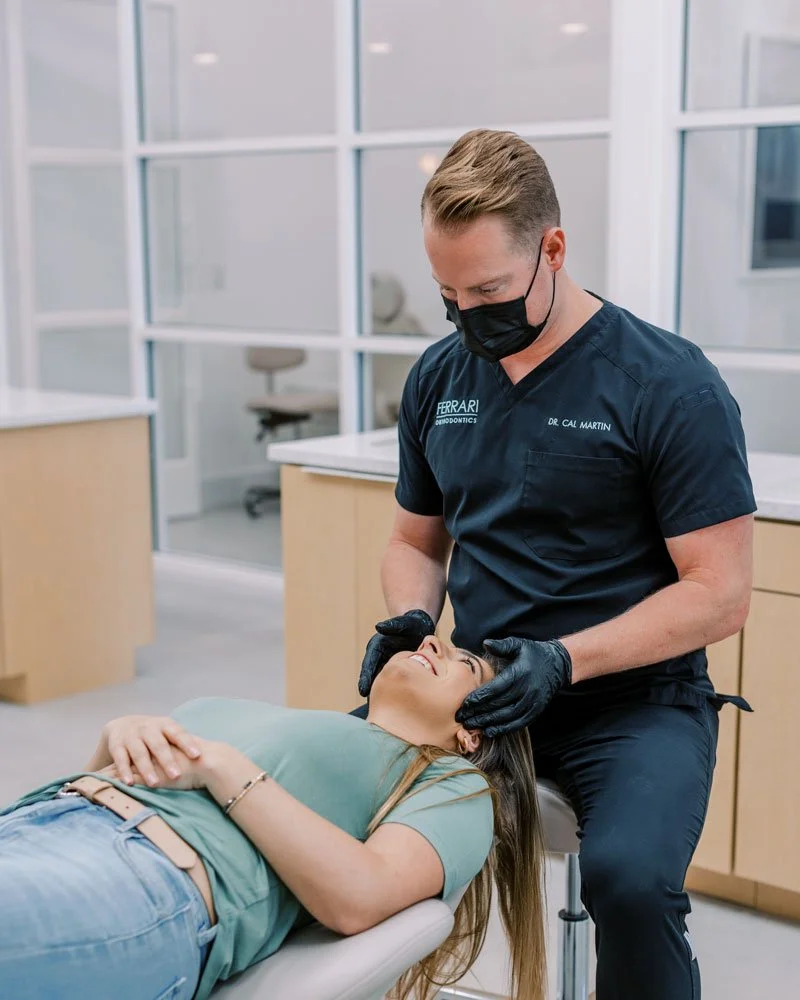
MARPE is often discussed as an adult expansion technique, but the decision is more nuanced.
Some older children and adolescents - including patients around the transition into the teenage years - may be evaluated for MARPE when their diagnosis and skeletal maturity make a more skeletal approach desirable.
Another patient of the same age may be treated effectively with conventional expansion. Chronologic age alone does not make the decision.
MARPE is different from traditional expanders
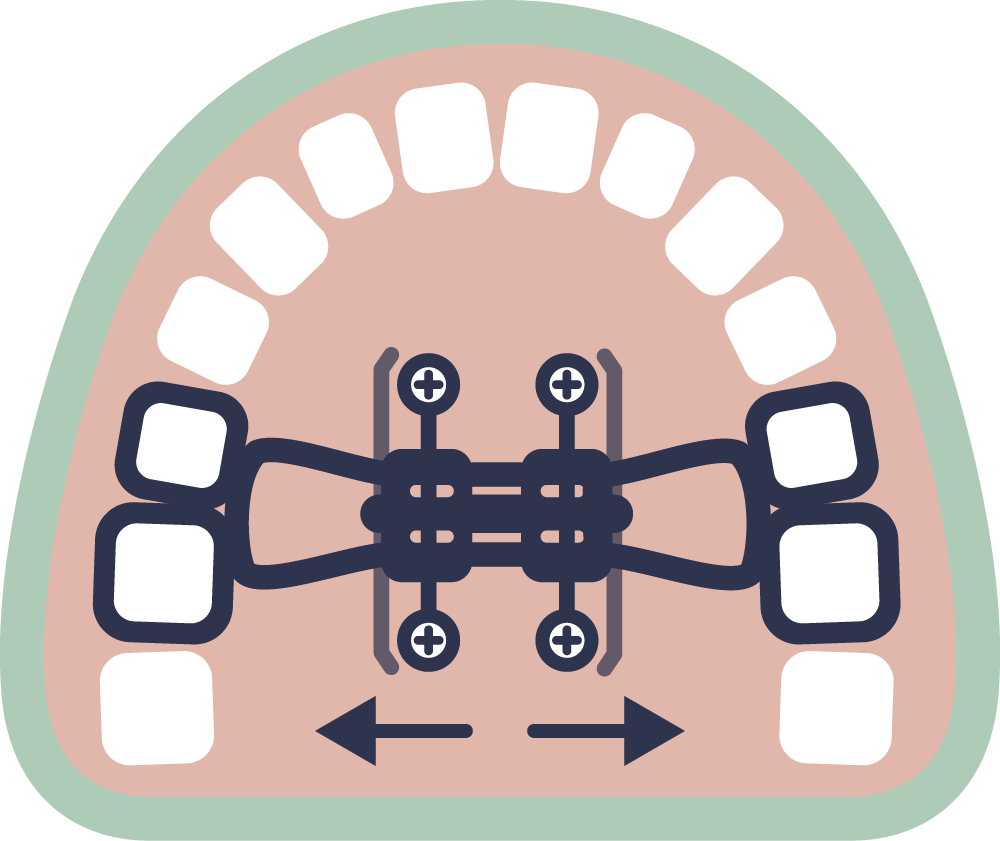
Traditional expanders rely primarily on the teeth to transmit expansion forces. MARPE incorporates temporary miniscrews in the palate so more of the force can be delivered to the skeletal structures of the maxilla.
That distinction becomes increasingly relevant as the midpalatal suture and surrounding structures mature. The design, number and position of miniscrews and the activation protocol are selected according to the patient's anatomy and treatment plan.
Who is a MARPE candidate
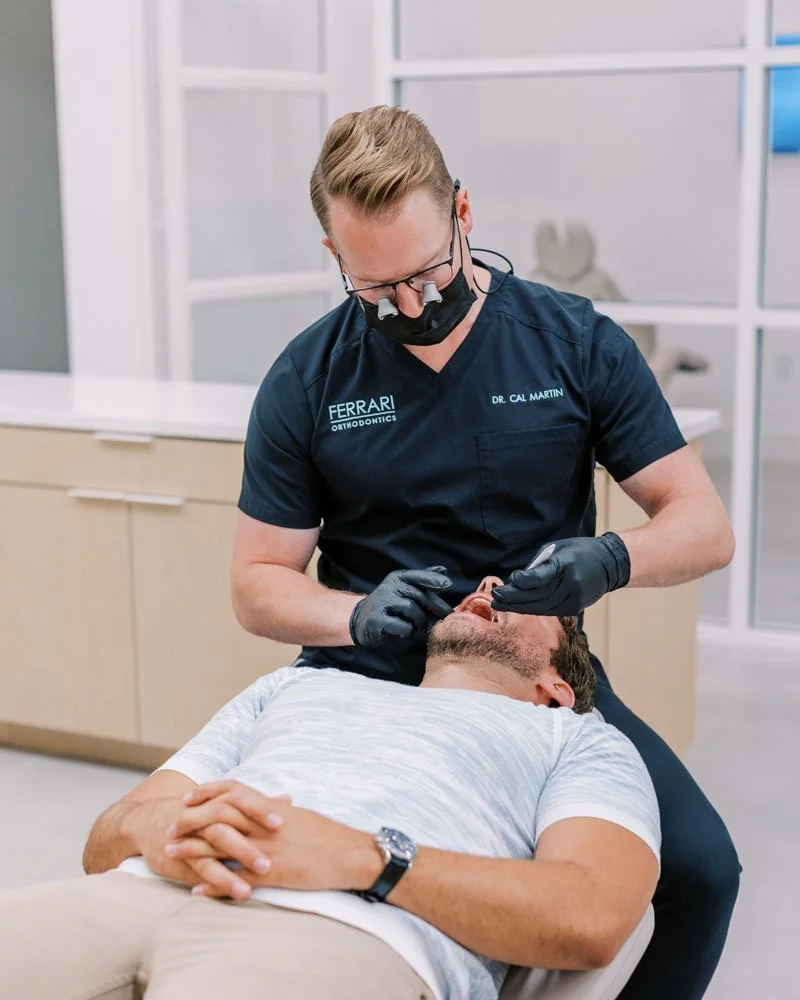
MARPE may be considered for patients with maxillary transverse deficiency, posterior crossbite or a narrow upper jaw when a more skeletal expansion strategy is appropriate.
Dr. Martin evaluates the bite, dental compensation, skeletal relationships, periodontal considerations, growth and appropriate imaging to determine the best approach.

Determining if MARPE is the right approach
MARPE can be an excellent option for selected adolescents and adults with a true maxillary transverse deficiency, but choosing the right expansion approach requires more than looking at a patient's age.
Dr. Martin considers the patient's:
transverse diagnosis
skeletal maturity
palatal anatomy
dental + periodontal support
treatment goals
skeletal vs dental correction
The goal is to choose the expansion strategy that best fits the individual patient.
For some patients, conventional expansion may still be appropriate. For others, MARPE may offer a better way to address a skeletal transverse discrepancy. In more mature or complex cases, a surgically assisted approach may deserve consideration.
Breathing and the airway
Expansion changes the anatomy of the maxillary and nasal region, and research continues to study how different expansion techniques affect nasal dimensions and airflow.
Ferrari Orthodontics does not diagnose sleep apnea from an orthodontic exam or a CBCT scan, and MARPE is not prescribed simply as a cure for snoring or sleep apnea.
When a patient has an orthodontic indication for expansion and also has meaningful breathing or sleep concerns, those issues can be considered as part of a collaborative, multidisciplinary evaluation.
MARPE expands our options.
MARPE is an exciting tool because it gives us another way to address transverse skeletal problems as patients mature.
The key is matching the expansion approach to the patient's anatomy, maturity and treatment goals.
-
MARPE stands for miniscrew-assisted rapid palatal expansion. It is an approach designed to deliver expansion forces more directly to the maxilla through temporary skeletal anchorage.
For selected adolescents and adults with a true maxillary transverse deficiency, MARPE expands the treatment options available as the skeletal system matures.
Some older children and adolescents - including patients around the transition into the teenage years - may be evaluated for MARPE when their diagnosis and skeletal maturity make a more skeletal approach desirable.
-
Traditional expanders rely primarily on the teeth to transmit expansion forces. MARPE incorporates temporary miniscrews in the palate so that more of the force can be delivered to the skeletal structures of the maxilla.
That distinction becomes increasingly relevant as the midpalatal suture and surrounding structures mature.
The design, number and position of miniscrews and the activation protocol are selected according to the patient's anatomy and treatment plan.
-
MARPE can be an excellent option for selected adolescents and adults with a true maxillary transverse deficiency, but choosing the right expansion approach requires more than looking at a patient's age.
Dr. Martin considers the patient's transverse diagnosis, skeletal maturity, palatal anatomy, dental and periodontal support, treatment goals, and the amount of skeletal versus dental correction needed.
For some patients, conventional expansion may still be appropriate. For others, MARPE may offer a better way to address a skeletal transverse discrepancy. In more mature or complex cases, a surgically assisted approach may deserve consideration.
The goal is to choose the expansion strategy that best fits the individual patient.
-
Expansion changes the anatomy of the maxillary and nasal region, and research continues to study how different expansion techniques affect nasal dimensions and airflow.
Ferrari Orthodontics does not diagnose sleep apnea from an orthodontic exam or a CBCT scan, and MARPE is not prescribed simply as a cure for snoring or sleep apnea.
When a patient has an orthodontic indication for expansion and also has meaningful breathing or sleep concerns, those issues can be considered as part of a collaborative, multidisciplinary evaluation.
FAQ
Expansion treatments
-
![A stylized illustration outline indicating movement or adjustment to the left and right]()
Palatal Expansion
Making room by addressing width
-
![A stylized illustration outline indicating movement or adjustment to the left and right]()
MARPE
A more skeletal approach to expansion
-
![Magnifying glass icon on an abstract green background.]()
Early Evaluation
Benefiting from timely intervention
-
![Stylized illustration outline of an upper palate with wavy lines.]()
Airway-Conscious
Addressing concerns with breathing
-
![A stylized illustration outline indicating movement or adjustment to the left and right]()
Adult Expansion
Thoughtful expansion strategies for adults