
Expansion + Growth
The bite is developing.
So are the jaws.
Orthodontics is often described as straightening teeth. But in a growing patient, the teeth are developing inside a changing skeletal system.
At Ferrari Orthodontics, we look beyond alignment to understand how the upper and lower jaws relate to one another, whether the upper jaw has appropriate width, how the bite is developing and how growth can influence the best time to treat.
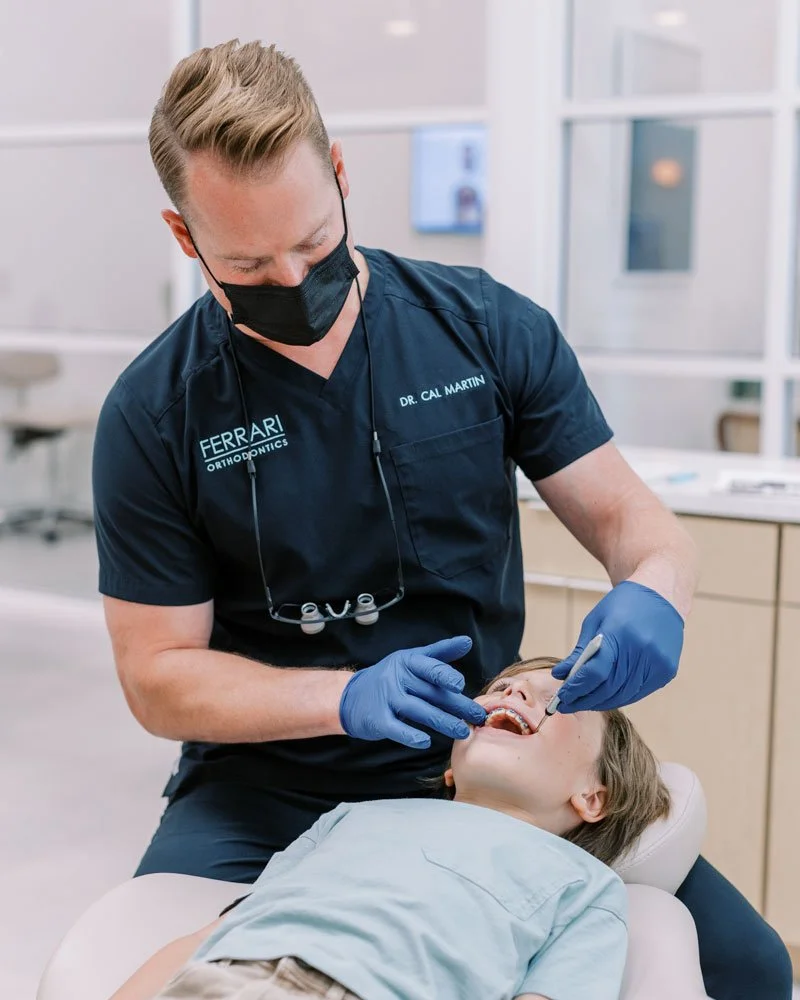

What does expansion actually mean?
Expansion is a broad term for increasing width in the upper dental arch or maxilla. When a meaningful transverse discrepancy is present, expansion can improve the relationship between the upper and lower jaws and create a healthier foundation for the developing bite.
The way expansion is accomplished depends on the patient's growth, skeletal maturity, anatomy and diagnosis. A young child with a posterior crossbite may be treated differently from a more mature adolescent or adult.

When width deserves
a closer look
Findings that may prompt an orthodontic evaluation include a posterior crossbite, a narrow or high-arched upper jaw, a functional shift of the lower jaw, significant crowding or a mismatch between the width of the upper and lower jaws.
Parents may also arrive with concerns about mouth breathing, snoring or nasal obstruction. Those symptoms deserve to be heard and considered alongside the orthodontic findings, with medical collaboration when appropriate.

Why timing matters
When a meaningful transverse discrepancy is identified in a growing child, earlier treatment can allow us to work with growth and address the problem while the developing structures are more responsive.
This is one reason we pay close attention to posterior crossbites, functional shifts and narrow upper jaws during early orthodontic evaluations.

Early evaluation helps us recognize these problems at a time when we have the greatest opportunity to address them thoughtfully and efficiently.
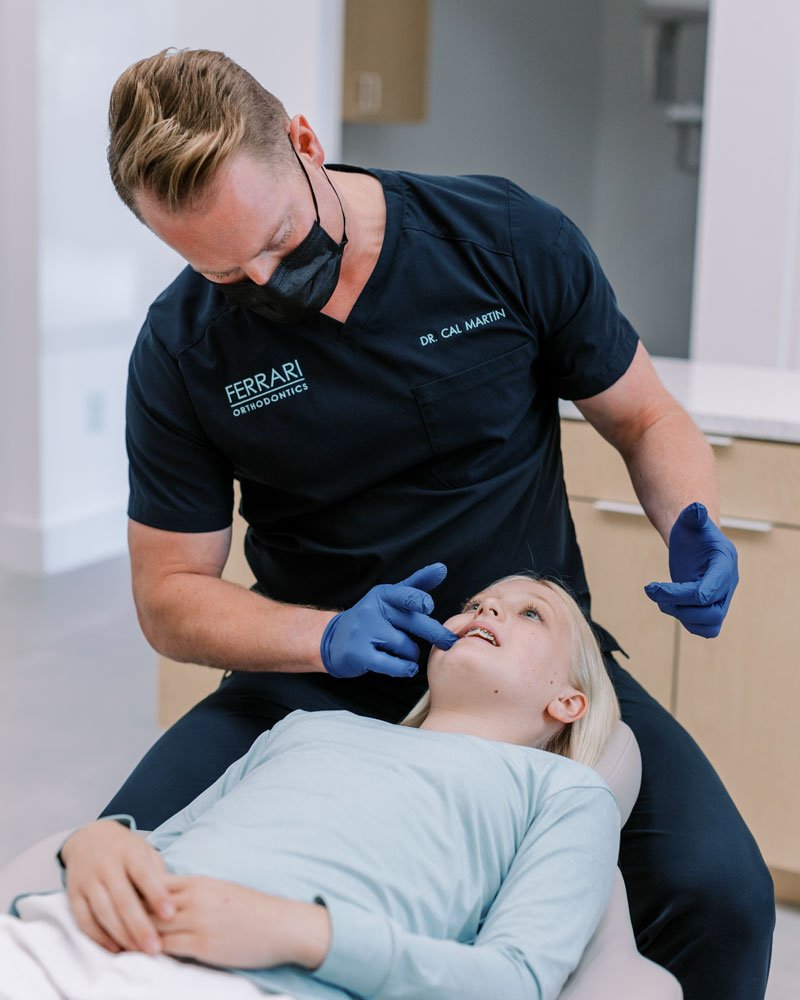
Expansion changes with skeletal maturity
Traditional palatal expansion is a highly effective way to address many transverse problems in growing patients.
As patients mature, the biology of expansion changes and different strategies may be appropriate.
For selected older children, adolescents and adults, miniscrew-assisted rapid palatal expansion - commonly called MARPE - can provide a more skeletal approach to expansion. In some mature patients, a surgically assisted approach may be appropriate.
Age is useful context, but it’s not the entire decision. Guiding the approach are:
✔growth
✔anatomy
✔skeletal maturity
✔the transverse diagnosis
Expansion treatments
-
![A stylized illustration outline indicating movement or adjustment to the left and right]()
Palatal Expansion
Making room by addressing width
-
![A stylized illustration outline indicating movement or adjustment to the left and right]()
MARPE
A more skeletal approach to expansion
-
![Magnifying glass icon over an abstract green shape.]()
Early Evaluation
Benefiting from timely intervention
-
![Stylized illustration outline of an upper palate with wavy lines.]()
Airway-Conscious
Addressing concerns with breathing
-
![A stylized illustration outline indicating movement or adjustment to the left and right]()
Adult Expansion
Thoughtful expansion strategies for adults





The right expansion for the right patient
Expansion can be one of the most valuable tools for addressing a developing transverse discrepancy.
When indicated, it allows us to address the width and relationship of the jaws, not simply the position of the teeth.
the process
The process begins with careful diagnosis. Dr. Martin evaluates growth, skeletal and dental relationships, the bite and individual treatment goals to determine which approach to expansion is most appropriate.

The goal
The goal is thoughtful treatment: recognize transverse problems early, understand what is driving them, and use expansion effectively when it is indicated.


Kind Words from Our Patients
I genuinely felt safe, supported, and in the best hands. If you’re looking for an orthodontic office that treats you with top-tier expertise and kindness, this is absolutely the place to go. Highly recommend!
-
Expansion is a broad term for increasing width in the upper dental arch or maxilla. When necessary, expansion can improve the relationship between the upper and lower jaws and create a healthier foundation for the developing bite.
-
An evaluation is important with a posterior crossbite, a narrow or high-arched upper jaw, a functional shift of the lower jaw, significant crowding or a mismatch between the width of the upper and lower jaws.
Mouth breathing, snoring or nasal obstruction are also symptoms that deserve to be heard and considered alongside the orthodontic findings, with medical collaboration when appropriate.
-
Dr. Martin evaluates growth, skeletal and dental relationships, the bite and individual treatment goals to determine which approach to expansion is most appropriate.
-
When a meaningful transverse discrepancy is identified in a growing child, earlier treatment can allow us to work with growth and address the problem while the developing structures are more responsive.
-
Age is useful context, but it is not the entire decision. As patients mature, the biology of expansion changes and different strategies may be appropriate. Guiding the approach are growth, anatomy, skeletal maturity, and the transverse diagnosis.